Monthly Rentals vs Hotels Cost: Which Is Cheaper for Long-Term Stays?

By Sarah Carter — Solo travel writer who has spent the past several years personally booking flights, testing insurance claims processes, and comparing budget platforms across dozens of countries.
Direct Answer: Are Monthly Rentals Cheaper Than Hotels?
For stays longer than 2–3 weeks, monthly rentals are almost always cheaper than hotels.
In most U.S. cities, a long-term apartment or Airbnb monthly rate costs 30–60% less than paying standard nightly hotel prices for 30 days.
Hotels, however, may offer better security structure, flexibility, and on-site amenities for stays under 14 days. If your stay exceeds 21–30 days, monthly rentals are typically the more cost-effective option.
Why Choosing the Wrong Option Can Cost You Thousands
If you're planning a 30-day stay, this decision isn’t just about comfort.
It affects:
Your total monthly spending
Food costs
Safety and neighborhood quality
Cancellation flexibility
Overall living experience
For U.S.-based women travelers — especially solo travelers, digital nomads, and long-stay guests — the wrong choice can mean:
Paying double for convenience
Staying in an area that feels uncomfortable
Losing money due to strict cancellation terms
Dealing with inconsistent property standards
This guide breaks down monthly apartment rentals vs hotels clearly, so you can make a financially sound and safety-conscious decision.
Quick Comparison: Monthly Rentals vs Hotels Cost
| Feature | Monthly Rentals (Apartments / Airbnb) | Hotels (Standard & Extended Stay) |
|---|---|---|
| Average 30-Day Cost (US) | $1,200 – $3,000 | $3,000 – $6,500 |
| Nightly Equivalent | $40 – $100 | $100 – $250 |
| Kitchen Access | Full kitchen | Limited (unless extended stay) |
| Cleaning | Self-maintained | Daily or weekly housekeeping |
| Security | Varies by property | Front desk, keycard access |
| Flexibility | 30-day minimum common | Easier date changes |
| Best For | Remote workers, relocations | Short stays, high-security needs |
| Trust Signals | Reviews, host ratings | Brand reputation |
Bottom line:
For stays beyond three weeks, monthly rentals are generally cheaper than hotels.
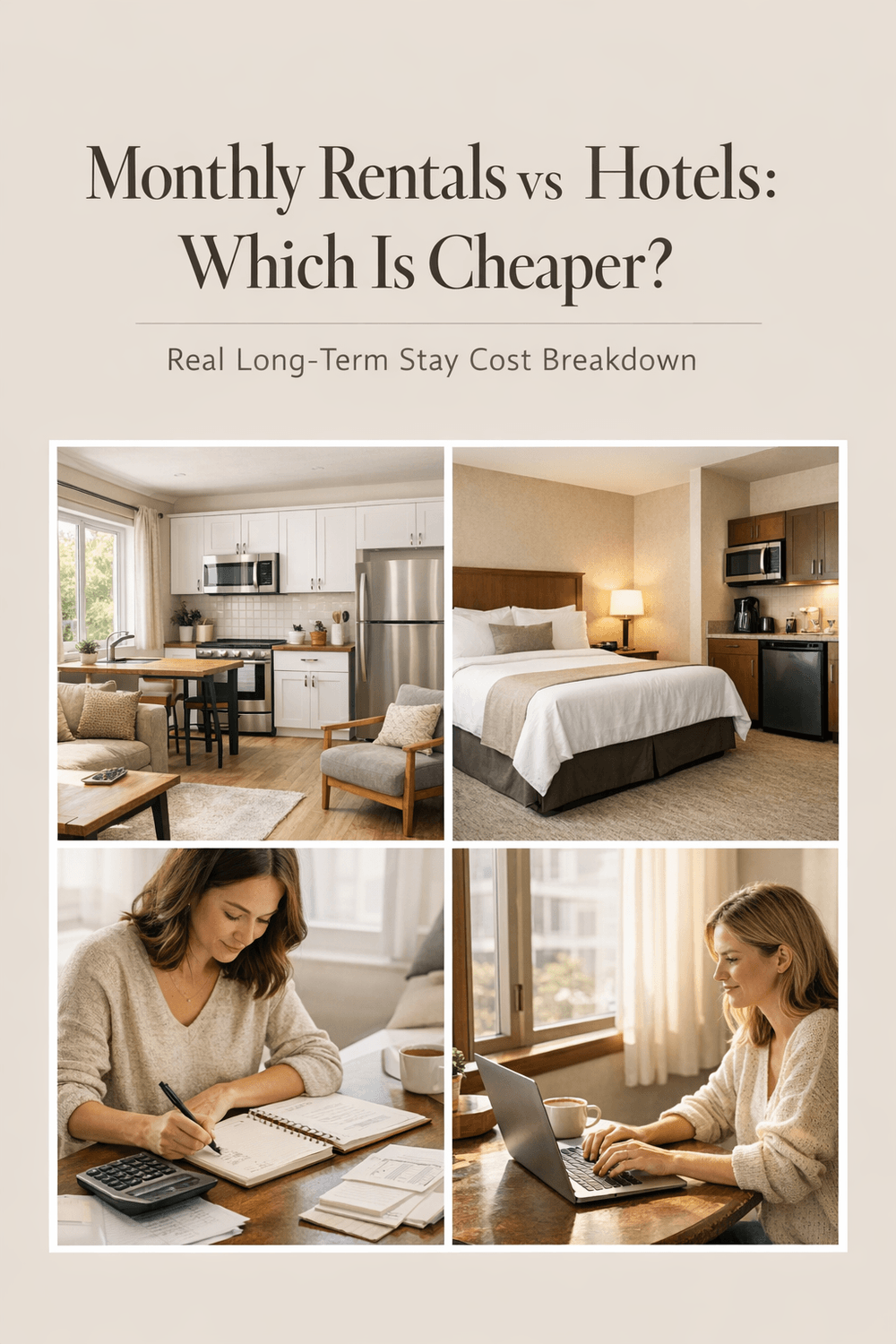
Option 1: Monthly Rentals (Apartments & Airbnb)
This category includes:
Furnished apartments
Month-to-month leases
Airbnb monthly discounts
Corporate housing platforms
What Monthly Rentals Typically Include
Most long-term rentals provide:
Full kitchen
Private living space
Utilities (often included)
Wi-Fi
Laundry access (in-unit or building)
Platforms like Airbnb commonly offer automatic discounts for stays of 28+ days, which significantly reduces the effective nightly rate.
Cost of Monthly Airbnb vs Hotel
In major U.S. cities (2026 averages):
Monthly Airbnb: $1,500–$2,800
30 nights in hotel: $3,500–$6,000
Hotels rarely discount long stays enough to match apartment-style pricing.
Pros of Monthly Rentals
Lower total monthly cost
Full kitchen (reduces food expenses)
More space and privacy
Better setup for remote work
Residential neighborhood experience
For women travelers staying one month or longer, having a kitchen alone can reduce food spending by several hundred dollars compared to eating out daily.
Cons of Monthly Rentals
Upfront payment is often required
Varying safety standards
No daily housekeeping
Strict cancellation policies
Limited on-site support
Safety and quality can vary significantly by property and neighborhood. Careful research is essential.
Best For
Digital nomads
Remote workers
Internship stays
Relocations
Long-term solo travelers
Who Should Avoid Monthly Rentals
Travelers staying under 2 weeks
Those needing 24/7 on-site staff
Travelers uncomfortable researching neighborhoods
Option 2: Hotels (Standard and Extended Stay)
This includes:
Traditional hotels
Extended stay hotel brands
Corporate housing hotels
Major extended-stay brands include:
What Long-Term Hotel Stay Costs Include
Hotels typically provide:
Daily or weekly housekeeping
24/7 front desk
On-site security
Amenities (gym, breakfast, parking)
Flexible booking policies
Even discounted extended stay hotels generally range:
$90–$180 per night
$2,700–$5,400 per month
In major cities, rates can exceed $6,000 monthly.
Pros of Hotels
Higher structured security
Reliable service standards
Easier date changes
Loyalty rewards
No furniture concerns
For risk-averse travelers, the predictability can justify higher monthly costs.
Cons of Hotels
Significantly more expensive for 30+ days
Limited cooking facilities
Smaller living space
Less neighborhood immersion
Best For
Short stays (under 14 days)
Business travelers
Women prioritizing structured security
Travelers in unfamiliar cities
Who Should Avoid Hotels
Budget travelers
Remote workers staying 30+ days
Travelers wanting apartment-style living
Extended Stay Hotels vs Apartments: Financial Comparison
Example: 30-day stay in a mid-sized U.S. city
| Expense Category | Monthly Rental | Extended Stay Hotel |
|---|---|---|
| Base Cost | $1,800 | $4,200 |
| Food (with kitchen) | $400 | $900 |
| Laundry | Included | $100 |
| Parking | Sometimes included | $300 |
| Total Estimated | $2,200 | $5,500 |
Estimated difference: $3,000+ in one month.
Over three months, that gap can exceed $9,000.
The cost difference compounds quickly on longer stays.
When Are Monthly Rentals Cheaper Than Hotels?
Monthly rentals become more economical when:
Staying longer than 21 days
Cooking regularly
Booking 1–3 months in advance
Avoiding peak tourist seasons
Hotels become competitive mainly when:
Using corporate rates
Redeeming loyalty points
Booking in lower-demand areas
Which Option Is Best for You?
Best for Solo Women Travelers
If safety is your top priority:
Choose well-reviewed extended stay hotels
Prefer properties with interior corridors
Research neighborhood safety
If budget matters more and your stay exceeds 30 days:
Choose verified monthly rentals
Select highly rated hosts
Book in established residential neighborhoods
Best for Long Stays (30–90 Days)
Clear winner: Monthly apartment rentals
They provide:
Lower cost
More livable space
Sustainable food options
Better work setup
Best for Budget Travelers
Monthly rentals are significantly cheaper than hotels for long stays.
The ability to cook changes your overall expense structure more than most travelers expect.
Best for Digital Nomads
Look for:
Reliable high-speed Wi-Fi
Dedicated desk setup
Quiet residential areas
Monthly furnished apartments are typically better suited than hotels for productivity and routine.
Safety Considerations for Women Travelers
When comparing monthly rentals vs hotel costs, safety should be evaluated separately from price.
Hotels Offer
24/7 staff presence
Keycard-controlled access
Security cameras
Immediate support
Monthly Rentals Require
Reviewing host ratings carefully
Checking exterior lighting
Researching neighborhood crime data
Reading guest safety reviews
Higher cost does not automatically guarantee higher safety. However, structured hotel environments often reduce uncertainty.
FAQs: Monthly Rentals vs Hotels Cost
Yes. In most U.S. cities, monthly rentals cost 30–60% less than paying nightly hotel rates for 30 days.
Monthly Airbnb: $1,500–$2,800
Hotels for 30 days: $3,500–$6,000
Some extended stay hotels provide reduced rates, but they rarely match apartment-level pricing.
Hotels generally offer more structured security. However, highly rated apartment rentals in safe neighborhoods can also provide a secure stay.
They can be worth it for short-to-medium stays when flexibility, service, and on-site support outweigh cost concerns.
Final Recommendation: What’s the Smarter Choice?
If your stay is:
Under 14 days: Choose a hotel.
15–30 days: Compare extended stay hotels carefully.
30+ days: Monthly rentals are usually the financially smarter option.
For budget-conscious U.S. women travelers staying longer than three weeks, monthly apartment rentals vs hotels almost always favor apartments in cost.
Hotels offer predictability and structured safety.
Monthly rentals offer space, savings, and long-term comfort.
Before booking, compare:
Total 30-day cost (not nightly rate)
Food expenses
Safety indicators
Cancellation policies
Making a structured comparison upfront can save thousands over a single long stay — without sacrificing comfort or security.
Latest Posts



TRAVEL INSPIRATION
Follow BudgetBroad on Pinterest
Save travel tips, packing ideas, destination guides, and smart travel inspiration for your next adventure.
★ BudgetBroad
BudgetBroad helps budget-conscious women, solo travelers, and digital nomads travel smarter and spend less through practical guides, comparisons, and money-saving travel services.
Travel Insurance
Packing & Cheap Stays
Some links on BudgetBroad are affiliate links. If you book or buy through them, we may earn a commission at no extra cost to you. We only recommend services we believe are genuinely useful to budget travelers.